
When Your Body Clock Is Off: How Circadian Rhythm Disruption Affects Sleep and Health

Updated: 4 days ago
You go to bed tired, yet your brain seems convinced it is the middle of the afternoon. Or you sleep for eight hours and still feel foggy because those hours happened at a time your body was preparing to be awake. That mismatch is more than inconvenient. It may be a sign that your circadian rhythm, your internal timing system, is out of sync with your schedule or environment.
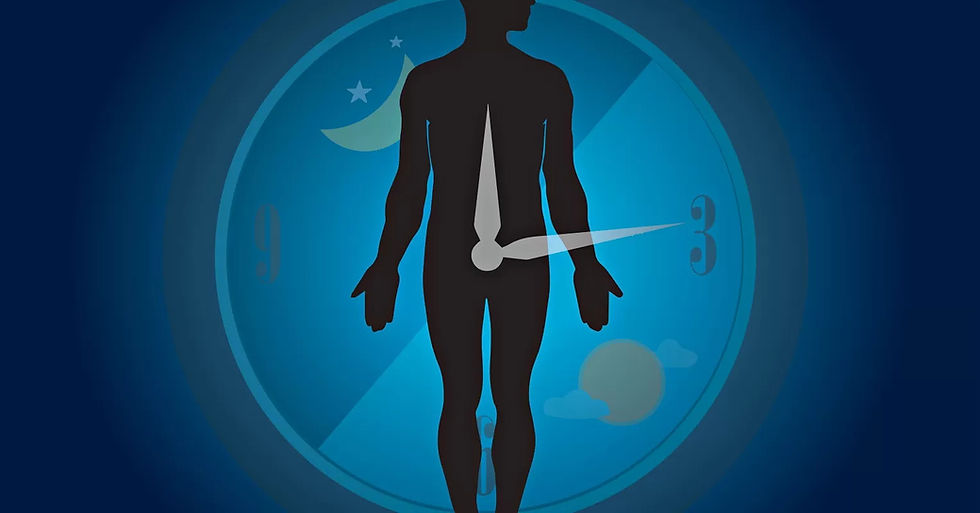
Occasional disruption after travel, a late night, or a stressful week is common. When the pattern lingers, however, it can affect sleep quality, alertness, mood, appetite, and other parts of your long-term health. Understanding what your body clock does, and what keeps knocking it off course, is an important first step toward getting back to restorative sleep.
What Is a Circadian Rhythm?
Your circadian rhythm is a roughly 24-hour pattern that helps coordinate when you feel sleepy and alert. It also influences body temperature, hormone release, digestion, appetite, and other biological functions. The brain’s central clock responds most strongly to light and darkness, while meal timing, activity, and regular routines provide additional time cues.
Sleep is also shaped by sleep pressure, which builds the longer you are awake. On a typical day, sleep pressure rises as your circadian system gradually prepares your body for nighttime rest. When those systems work together, falling asleep and waking up tend to feel more natural. When they pull in opposite directions, you may be exhausted at the wrong time and wide awake when you want to sleep.
What Circadian Rhythm Disruption Feels Like
Circadian disruption, sometimes called circadian misalignment, happens when your internal clock does not match the timing of sleep, work, school, meals, or light exposure. Jet lag is the familiar short-term example. Shift work, irregular sleep schedules, very late nights, early work start times, and nighttime light can create an ongoing mismatch.
Common signs include:
Difficulty falling asleep at the time you need to
Difficulty waking up on schedule
Frequent nighttime waking or sleep that does not feel restorative
Excessive daytime sleepiness, fatigue, or an afternoon crash
Poor concentration, slower reaction time, or memory lapses
Irritability, low mood, or feeling emotionally off balance
Headaches, digestive changes, or changes in appetite
Sleeping much later on days off to recover from the workweek
These symptoms overlap with insomnia, sleep apnea, restless legs syndrome, medication effects, and several medical or neurological conditions. That is why persistent sleep disturbances in Austin, TX, or Houston, TX should not automatically be blamed on stress, screens, or a “bad body clock.” A careful evaluation can help separate a timing problem from another sleep disorder—or identify when more than one issue is present.
What Can Throw Your Body Clock Off?
Irregular sleep and wake times
A weekday schedule of 6:00 a.m. wake-ups followed by noon wake-ups on the weekend can create “social jet lag.” Your body keeps trying to adapt to a moving target. Even if the total hours look adequate on paper, the shifting schedule may make Sunday night and Monday morning especially rough.
Nighttime light and too little morning light
Bright light in the evening, including room lighting and light from electronic devices, can send a daytime signal when your brain needs darkness. At the other end of the day, spending mornings indoors may deprive the clock of a strong wake-up cue. Screens are part of the picture, but timing, brightness, distance, and what you are doing on the device all matter.
Shift work and overnight schedules
Night and rotating shifts ask the body to work, eat, and stay alert during its biological night, then sleep when daylight promotes wakefulness. Shift workers often face both circadian misalignment and shortened sleep. This combination can affect alertness and workplace or driving safety, not just comfort.
Travel across time zones
Jet lag occurs because the clock cannot instantly reset to a new light-dark schedule. Eastward travel is often harder because it requires the body to fall asleep earlier. The number of time zones crossed, direction of travel, timing of light, and individual chronotype can all shape recovery.
Age, biology, and health conditions
Teenagers naturally tend to shift later, while many older adults become sleepy and wake earlier. Blindness, some neuro-developmental or neurological conditions, and brain injuries can also affect circadian timing. Genetics help explain why one person is bright-eyed at dawn while another does their best thinking at 10:00 p.m., no amount of motivational coffee mug wisdom changes that completely.
How Circadian Disruption Can Affect Sleep
Circadian misalignment may look like insomnia, but timing is the clue. Someone with delayed sleep-wake phase disorder may be unable to fall asleep until very late, yet sleep normally and wake refreshed when allowed to follow that later schedule. Someone with advanced sleep-wake phase disorder may become sleepy unusually early and wake long before dawn. Shift work disorder and non-24-hour sleep-wake rhythm disorder involve different patterns and require different approaches.
Living out of sync can lead to shorter sleep, fragmented sleep, or sleep at a biologically unfavorable time. The next day may bring fatigue, reduced attention, and excessive daytime sleepiness. If you are searching for ways to get better sleep in Austin or Houston, it is worth looking beyond bedtime alone. Wake time, morning light, work hours, meals, naps, and weekend habits may be keeping the cycle in place.
How an Off-Schedule Body Clock Can Affect Health
A disrupted clock does not guarantee that someone will develop a medical condition. Still, research links chronic circadian misalignment and insufficient sleep with meaningful health concerns. Some of the risk may come from disrupted timing itself, some from too little sleep, and some from lifestyle or work factors that often travel with both.
Mood, memory, and performance
Poorly timed or insufficient sleep can make concentration, learning, decision-making, and emotional regulation harder. Reaction time may slow, which raises safety concerns for driving and jobs that demand sustained attention. Repeated disruption can also worsen stress and mood symptoms.
Metabolism and appetite
Circadian rhythms help organize glucose regulation, appetite hormones, and the timing of digestion. Eating and being active during the biological night may work against those systems. Long-term circadian misalignment and short sleep have been associated with weight gain, obesity, insulin resistance, and type 2 diabetes, although individual risk depends on many factors.
Heart and blood-vessel health
Sleep and circadian timing influence blood pressure, heart rate, inflammation, and stress hormones. Research on shift work and sleep disruption has found associations with high blood pressure and cardiovascular disease. These findings describe population-level risk; they do not mean one week of late nights causes heart disease.
Immune function and overall well-being
The immune system follows daily rhythms, too. Repeatedly shortened or mistimed sleep may affect inflammatory and immune processes. In everyday terms, people often notice that they feel run-down, recover poorly, and have less energy for movement, meals, and social connection when sleep timing stays chaotic.
Practical Ways to Support a Healthier Circadian Rhythm
If your schedule allows it, the following habits can strengthen the signals that keep your clock on time. Change gradually; a dramatic reset attempted in one night usually ends with you staring at the ceiling and negotiating with tomorrow.
Anchor your wake time. Get up at about the same time each day, including weekends. A consistent wake time is often more useful than forcing an unrealistically early bedtime.
Seek light after waking. Morning outdoor light can reinforce wakefulness and help set the clock. The best timing varies when someone has a diagnosed circadian rhythm disorder, so individualized guidance matters.
Dim the evening. Reduce bright overhead lighting and screen brightness during the hour or two before bed. Choose calmer activities that do not keep the brain in high-alert mode.
Move earlier in the day when possible. Regular physical activity supports sleep, but intense exercise close to bedtime can be activating for some people.
Keep meals reasonably consistent. Large meals and heavy alcohol use near bedtime may disrupt sleep. Shift workers may need a tailored plan for meal timing rather than a one-size-fits-all rule. Use caffeine strategically. Caffeine can remain active for hours. If you are having trouble sleeping, note when and how much you consume, not just whether you drink coffee.
Keep naps intentional. A short early-afternoon nap may help some people, but late or long naps can reduce sleep pressure and make bedtime harder.
Track the pattern. For two weeks, record bedtimes, estimated sleep onset, awakenings, wake times, naps, caffeine, work shifts, and morning energy. A sleep diary can reveal patterns that memory smooths over.
Melatonin is not simply a general-purpose sleeping pill. Timing and dose can shift the circadian clock in different directions, and products vary. Bright-light therapy is also timing-sensitive. Talk with a qualified health professional before using either approach, especially if you take medications, are pregnant, have bipolar disorder, or have another medical condition.
When Better Sleep Habits Are Not Enough
Consider professional evaluation when sleep problems last for several weeks, interfere with work or school, affect driving safety, or persist despite a steady routine. Loud snoring, witnessed pauses in breathing, gasping, morning headaches, unusual movements, or sudden sleep attacks deserve medical attention because another sleep disorder may be involved.
A sleep specialist may review your sleep history, work and school schedule, medications, health conditions, and sleep diary. Depending on the symptoms, evaluation may include actigraphy, questionnaires, laboratory testing, or a sleep study. Not every circadian concern needs an overnight study, but testing can be important when sleep apnea, movement disorders, narcolepsy, or nocturnal neurological events are suspected.
For patients seeking insomnia treatment in Austin, TX, or Houston, TX, the goal should be to understand why sleep is difficult, not merely to make the patient drowsy. Comprehensive Sleep Medicine Associates (CSMA) evaluates sleep timing alongside breathing, movement, neurological, behavioral, and lifestyle factors. That broader view can help distinguish a circadian issue from another condition and guide an individualized treatment plan.
Ready to Get Your Sleep Back on Schedule?
If persistent fatigue, an unpredictable sleep schedule, or ongoing trouble sleeping is affecting your health or daily life, CSMA can help. Our sleep medicine team provides comprehensive evaluations for patients in Austin, the Houston Medical Center, Sugar Land, and The Woodlands.

Schedule an appointment with a sleep disorder specialist in Austin or Houston to identify what is disrupting your sleep and build a plan around your body, your schedule, and your health. Book an appointment with CSMA or call 888-503-2762.
Frequently Asked Questions About Circadian Rhythm Disruption
How do I know if my circadian rhythm is disrupted?
A consistent pattern is more telling than a single bad night. You may struggle to sleep at the required time, feel unusually sleepy during the day, wake much earlier or later than intended, or sleep well only when allowed to follow a different schedule. A sleep diary can help a specialist see whether timing is driving the problem.
Can circadian rhythm disruption cause insomnia?
Yes. Circadian misalignment can make it difficult to fall asleep or wake at socially required times. It can also exist alongside chronic insomnia. The distinction matters because treatment for a timing disorder may differ from treatment for insomnia that is not primarily circadian.
How long does it take to reset a circadian rhythm?
There is no universal timeline. A mild schedule shift may improve over several days, while jet lag, rotating shifts, or a circadian rhythm sleep-wake disorder may take longer. The direction and size of the shift, light exposure, consistency, age, and individual biology all influence the pace.
Does blue light cause circadian rhythm disruption?
Evening light can delay the clock and suppress the normal nighttime rise in melatonin. Blue-enriched light can have a strong effect, but brightness, timing, duration, and distance matter too. Dimming the whole environment is often more useful than focusing on one device setting.
Should I take melatonin to fix my sleep schedule?
Melatonin may help in selected situations, but taking it at the wrong time can be ineffective or shift the clock in an unwanted direction. Dose, product quality, medication interactions, and health history matter. Ask a clinician who understands circadian timing before using it as a treatment.
Can a sleep study diagnose a circadian rhythm disorder?
Circadian disorders are often identified through history, sleep diaries, and actigraphy rather than a single overnight sleep study. A sleep study may still be recommended when symptoms suggest sleep apnea, periodic limb movements, narcolepsy, seizures, or another disorder that could be disrupting sleep.
When should I see a sleep specialist?
Seek help when trouble sleeping or daytime sleepiness lasts several weeks, causes distress, impairs work or school, or makes driving unsafe. Prompt evaluation is also important for loud snoring, breathing pauses, gasping, sudden sleep episodes, or unusual nighttime behaviors.
Medical Disclaimer
This article is for general educational purposes only and is not a substitute for medical advice, diagnosis, or treatment from a qualified healthcare professional. Do not start, stop, or change medications, supplements, light therapy, or other treatment based solely on this information. If sleepiness makes driving or operating equipment unsafe, stop and seek prompt medical guidance. For a medical emergency, call 911 or go to the nearest emergency department.


Comments