
Why Does My Child Wake Up Tired Every Morning?

Your child went to bed at a reasonable time. They appeared to sleep all night. However, in the morning, getting them out of bed feels like negotiating with a tiny, exhausted attorney. Your child woke up tired, groggy, irritable, slow to get moving, and are already asking when they can go back to sleep.

Occasional tired mornings happen to almost every child. A late practice, a stressful school week, an illness, travel, or one more chapter of a favorite book can temporarily disrupt sleep. But when your child wakes up tired morning after morning or if they struggle with sleepiness, attention, mood, or energy throughout the day, it may be a sign that something more is affecting the quality of their sleep.
For parents searching for the causes of a chronically tired child, the key question is not only, “How long was my child in bed?” It is also, “How well did my child sleep?” A child can spend the recommended number of hours in bed but still miss the deep, restorative sleep their brain and body need.
What Does Excessive Daytime Sleepiness Look Like in Children?
Excessive daytime sleepiness in children does not always look like it does in adults. A sleepy adult may yawn, move slowly, or doze off. A tired child may become unusually active, impulsive, emotional, distracted, or difficult to redirect and can often be misdiagnosed as having ADHD.
Signs that your child may not be getting restorative sleep include:
Difficulty waking up, even after what seems like a full night of sleep
Falling asleep in the car, during class, while reading, or during quiet activities
Needing frequent or unusually long naps
Irritability, mood swings, or emotional outbursts
Hyperactivity, impulsivity, or difficulty sitting still
Problems with attention, memory, organization, or school performance
Morning headaches or a dry mouth upon waking
Low motivation or reduced interest in activities they normally enjoy
Sleeping much later on weekends in an attempt to catch up
These symptoms do not point to one diagnosis on their own. They are clues that can help a pediatrician or sleep specialist understand whether your child’s sleep schedule, sleep quality, breathing, health, or medications may be contributing.
How Much Sleep Does Your Child Need?
Sleep needs change with age. General recommendations from the American Academy of Sleep Medicine call for
10 to 13 hours per day for children ages 3 to 5, including naps
9 to 12 hours for children ages 6 to 12
8 to 10 hours for teenagers
Individual needs vary, but regularly falling short can affect attention, behavior, mood, learning, and physical health.
It is also important to separate time in bed from time asleep. A child may be in their room for ten hours but spend part of that time using a phone, struggling to fall asleep, waking repeatedly, or experiencing breathing disruptions. Quantity matters, but quality matters just as much.
Common Reasons a Child May Wake Up Tired
1. They are simply not getting enough sleep
Busy family schedules can quietly chip away at sleep. Homework, sports, activities, screen time, late dinners, and early school start times may push bedtime later while wake time stays fixed. Even a modest sleep shortage can accumulate across the week and leave a child depleted by Friday.
2. Their sleep schedule is inconsistent
Large differences between weekday and weekend sleep schedules can make Monday morning feel like jet lag without the vacation photos. A consistent bedtime and wake time help regulate the body’s internal clock. If a child stays up several hours later and sleeps well into the morning on weekends, returning to the school schedule can be difficult.
3. Screens, stress, or the sleep environment are interfering
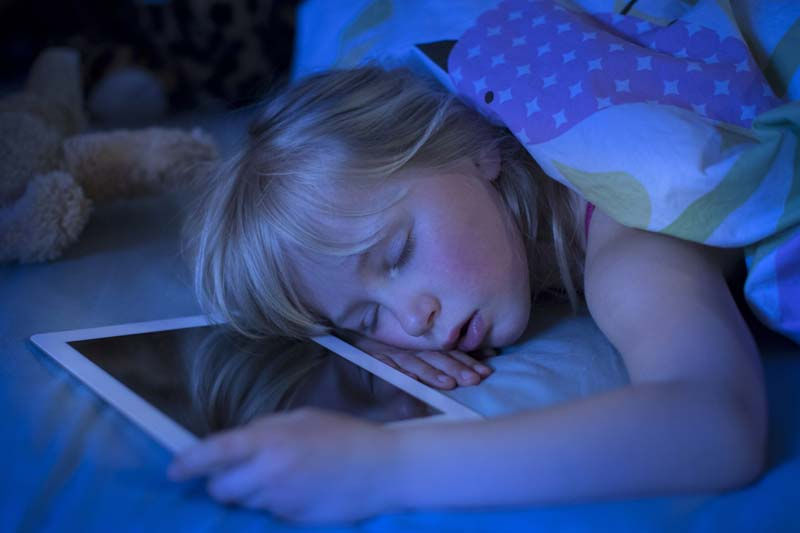
Bright screens and stimulating content can delay bedtime and make it harder for the brain to settle. Stress, anxiety, noise, light, an uncomfortable room, caffeine, and an unpredictable bedtime routine can also reduce sleep quality. For some children, improving daily habits makes a meaningful difference. For others, persistent tiredness remains even after the family has created a healthy routine.
4. A medical condition or medication may be contributing
Allergies, asthma, chronic pain, reflux, anxiety, depression, iron deficiency, thyroid problems, and other medical concerns can affect sleep or daytime energy. Some medications can also cause drowsiness or disrupt sleep. A medical professional can review the full picture rather than assuming every tired morning has the same cause.
5. A sleep disorder is disrupting restorative sleep
Insomnia, restless legs syndrome, circadian rhythm disorders, parasomnias, narcolepsy, and sleep-related breathing disorders can all interfere with healthy sleep. When tiredness is persistent, severe, or accompanied by nighttime warning signs, a sleep evaluation can help identify what is happening after the lights go out.
Could Sleep and Breathing Issues Be the Missing Clue?
Sleep and breathing issues in children deserve special attention because a child may appear to remain asleep while their breathing repeatedly becomes difficult. Snoring and obstructive sleep apnea can fragment sleep, reduce sleep quality, and leave a child tired even after a long night in bed.
Watch and listen for nighttime signs such as:
Loud, frequent, or habitual snoring
Pauses in breathing, gasping, choking, or snorting
Mouth breathing or sleeping with the neck extended
Very restless sleep, frequent position changes, or repeated awakenings
Heavy sweating during sleep
Teeth grinding (sleep bruxism)
Bedwetting beyond the expected developmental stage
During the day, a child with disrupted breathing may show sleepiness, morning headaches, difficulty concentrating, behavior changes, low energy, or declining school performance. Not every child who snores has sleep apnea, and not every tired child has a breathing disorder. However, frequent snoring, especially with gasping, breathing pauses, or daytime symptoms, should not be dismissed as merely “normal.”
What Parents Can Try at Home
Healthy sleep habits are a sensible first step when there are no urgent breathing concerns. Try these changes consistently for two weeks:
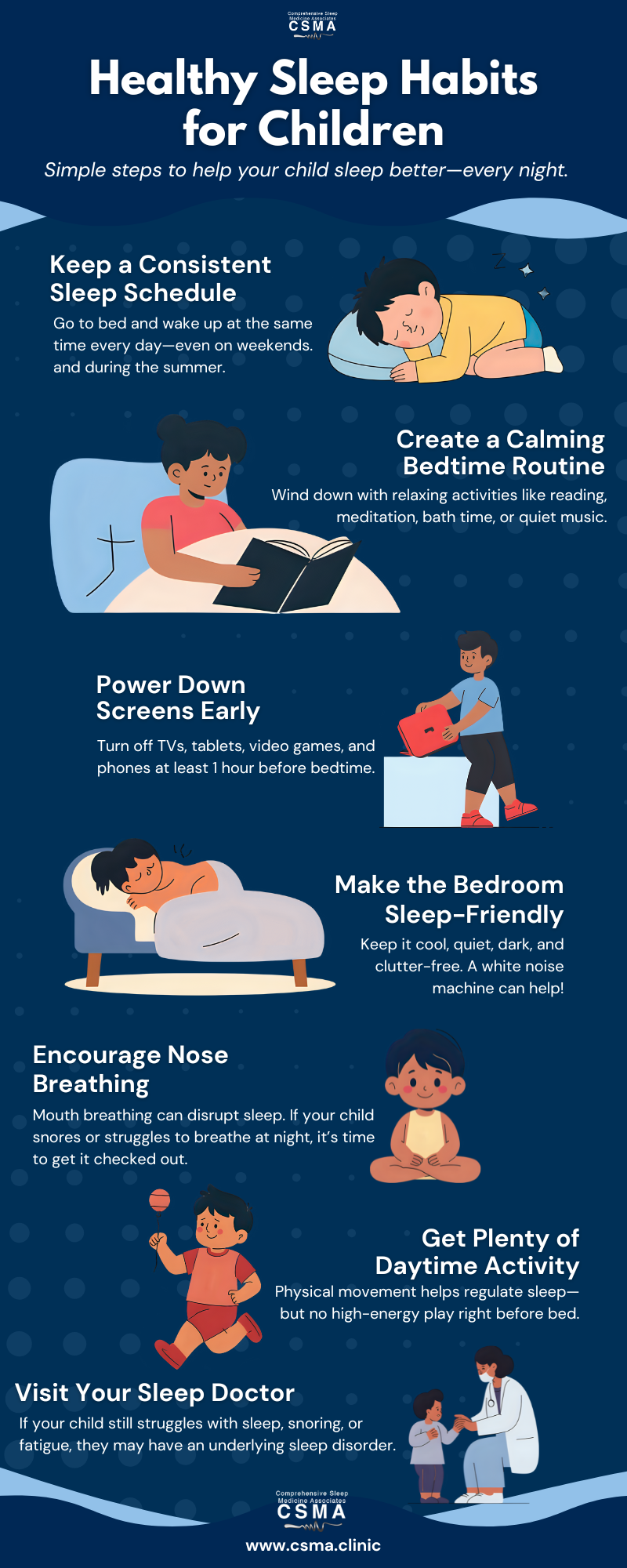
Set an age-appropriate bedtime and a consistent wake time, including weekends.
Create a calm, predictable bedtime routine that begins at the same time each evening.
Turn off phones, tablets, gaming systems, and television at least one hour before bed.
Keep the bedroom cool, dark, quiet, and reserved primarily for sleep.
Avoid caffeine, including energy drinks, tea, soda, and chocolate, late in the day.
Encourage daylight exposure and physical activity earlier in the day.
Keep a sleep diary recording bedtime, awakenings, snoring, morning symptoms, naps, and daytime behavior.
A sleep diary can reveal patterns and provide useful information during an appointment. If your child remains tired despite adequate sleep opportunity and consistent habits, it may be time to move beyond bedtime tweaks and look for an underlying cause.
When Should You Schedule a Sleep Evaluation?
Consider speaking with a pediatric sleep specialist if your child’s tiredness lasts for several weeks, interferes with school or family life, or occurs with snoring, breathing pauses, gasping, mouth breathing, morning headaches, unusual movements, persistent insomnia, or significant daytime sleepiness.
Seek prompt medical care if you observe prolonged breathing pauses, blue or gray coloring, severe difficulty breathing, fainting, confusion, or another acute symptom. Those concerns should not wait for a routine sleep appointment.
During a comprehensive evaluation, the clinician may review your child’s medical history, sleep schedule, bedtime habits, medications, breathing symptoms, daytime functioning, and family observations. Depending on the findings, additional testing, such as an overnight sleep study, may be recommended. Not every child needs the same testing or treatment, which is why an individualized assessment matters.
Help Your Child Wake Up Ready for the Day
Morning exhaustion should not become your child’s “normal.” If your child regularly wakes tired, struggles to stay alert, snores, breathes through their mouth, or has attention, mood, or school concerns, Comprehensive Sleep Medicine Associates can help determine whether an underlying sleep problem is standing between your child and restorative rest.
Schedule an appointment with CSMA for a comprehensive pediatric sleep evaluation. Families looking for a Houston sleep doctor or Austin sleep doctor can access experienced, individualized care through CSMA’s Texas locations. Request an appointment today via our contact form or call 888-503-2762.
A clearer understanding of your child’s sleep could be the first step toward brighter mornings, better days, and healthier development.

Frequently Asked Questions About Children Waking Up Tired
Why is my child still tired after sleeping 10 hours?
Ten hours in bed does not always equal ten hours of restorative sleep. Your child may be waking briefly, struggling to breathe, experiencing restless sleep, or sleeping at times that do not align well with their body clock. Medical conditions, medications, and individual sleep needs may also play a role. Persistent tiredness warrants a conversation with a healthcare professional.
Can sleep apnea make a child tired during the day?
Yes. Obstructive sleep apnea can repeatedly disrupt breathing and fragment sleep. Children may show daytime sleepiness, irritability, hyperactivity, attention problems, morning headaches, or school difficulties. Frequent snoring, gasping, or pauses in breathing are important signs to discuss with a doctor.
Can a tired child look hyperactive instead of sleepy?
Yes. Children do not always respond to inadequate sleep by appearing drowsy. Some become restless, impulsive, emotional, or unusually active. Sleep problems can resemble or worsen attention and behavior concerns, although those symptoms can have many possible causes.
Is snoring normal in children?
Occasional snoring during a cold may happen, but loud, frequent, or habitual snoring should be discussed with a medical professional, especially if it occurs with mouth breathing, gasping, breathing pauses, restless sleep, morning headaches, or daytime problems.
Will my child automatically need a sleep study?
No. A sleep specialist first reviews symptoms, health history, sleep patterns, medications, and family observations. If a sleep-related breathing disorder or another condition is suspected, an overnight sleep study may be recommended to gather objective information.
When should I contact CSMA?
Contact CSMA when tiredness persists despite a consistent, age-appropriate sleep routine or when your child has frequent snoring, breathing pauses, excessive daytime sleepiness, recurring morning headaches, difficulty waking, attention or behavior changes, or declining school performance.


Comments