
Could Your Child’s ADHD Symptoms Actually Be a Sleep Problem?

Updated: Aug 12
Your child is bright, curious and full of potential, but lately, school mornings feel like an uphill climb. They are difficult to wake, irritable before breakfast and unable to stay focused once they reach the classroom. Their teacher may report daydreaming, impulsive behavior, forgetfulness or nonstop movement. Naturally, attention-deficit/hyperactivity disorder (ADHD) may be one of the first explanations that comes to mind.
But there is another question worth asking: How well is your child actually sleeping?

The connection between ADHD and sleep disorders is more complicated than many parents realize. Poor-quality sleep can cause behaviors that look remarkably similar to ADHD. At the same time, children who truly have ADHD may also experience sleep problems that make their daytime symptoms more difficult to manage. In other words, sleep may imitate ADHD, intensify it or exist alongside it.
That does not mean ADHD is “just a sleep problem,” and it does not mean parents should dismiss a diagnosis. It means sleep deserves a place in the conversation. A thorough pediatric sleep evaluation can help uncover whether disrupted sleep is contributing to your child’s difficulties and help your family identify the right next steps.
Tired Children Do Not Always Look Tired
When adults are sleep-deprived, they often become quiet, sluggish and eager for a nap. Children may respond very differently. An overtired child can appear wired rather than weary.
Instead of putting their head down, a sleep-deprived child may:
Become unusually active, impulsive or silly
Have trouble sitting still or following directions
Lose focus during lessons or conversations
Make careless mistakes
Become easily frustrated, emotional or aggressive
Struggle with memory and organization
Fall behind academically despite strong abilities
Seem unmotivated or oppositional
These behaviors overlap with common ADHD symptoms, which is one reason the underlying cause may be difficult to recognize. The American Academy of Pediatrics notes that pediatric sleep apnea symptoms can include difficulty paying attention and behavior problems, in addition to snoring and breathing difficulties at night.
One clue is timing. Pay attention to whether behavior is worse after restless nights, during early mornings or as the school week progresses. Weekend “catch-up” sleep, falling asleep during short car rides or major difficulty waking can also suggest that your child is not getting enough restorative sleep.
Which Sleep Problems Can Affect Attention and Behavior in Children?
Several sleep concerns can interfere with the quality, timing or duration of a child’s sleep:
1) Obstructive Sleep Apnea
Obstructive sleep apnea occurs when a child’s airway becomes partially or completely blocked repeatedly during sleep. These interruptions can fragment sleep and affect oxygen levels, even when the child does not remember waking.
Parents often associate sleep apnea with adults, but children can have it too. Warning signs may include:
Frequent or loud snoring
Pauses in breathing
Gasping, choking or snorting during sleep
Mouth breathing
Restless sleep or unusual sleeping positions
Sweating during sleep
Bedwetting beyond the expected age
Difficulty waking
Daytime attention or behavior problems
Morning headaches
If you have been searching for information about obstructive sleep apnea in Houston, TX, it may be because your child’s snoring or daytime behavior has raised concerns. Chronic snoring should not simply be written off as a cute family trait. Healthy breathing during sleep should generally be quiet and easy.
2) Insufficient Sleep
Sometimes the issue is not a specific disorder but simply too little sleep. Homework, sports, social activities, anxiety and late-night screen use can steadily push bedtime later. A child may spend enough hours in bed on paper yet take a long time to fall asleep or wake repeatedly.
Consistent sleep routines matter, but ongoing difficulties should not automatically be treated as a discipline problem. A child who repeatedly resists bedtime may be dealing with anxiety, insomnia, a shifted body clock, breathing difficulties or another condition that makes sleep uncomfortable.
3) Restless Legs Syndrome and Periodic Limb Movements
Some children experience uncomfortable sensations in their legs at bedtime or repeated leg movements while asleep. Younger children may struggle to describe the sensation and instead say that their legs feel “jumpy,” “itchy” or as though they have too much energy.
Movement-related sleep disruptions, such as restless legs syndrome, can prevent deep, continuous rest.
4) Circadian Rhythm Disorders
During adolescence, the body’s internal clock naturally tends to shift later. For some teens, that shift becomes significant enough that falling asleep at a conventional bedtime and waking for school feel nearly impossible. The resulting sleep loss can affect mood, focus, punctuality and school performance.
5) Medication-Related Sleep Difficulties
Some medications, including stimulants used to treat ADHD, may affect sleep timing or quality in certain children. Never change a child’s medication without guidance from the prescribing clinician. Instead, share what you observe, including bedtime, estimated sleep onset, nighttime waking and morning behavior. Medication timing or the overall treatment plan may need to be reviewed by the appropriate provider.
Signs Parents May Notice at Night and in the Morning
The most useful clues are not always found on a report card. Consider what happens before bed, overnight and during the first hour after waking.
At night, look for snoring, mouth breathing, teeth grinding, gasping, pauses in breathing, frequent movement, sleepwalking, repeated awakenings or resistance to bedtime. In the morning, watch for dry mouth, irritability, confusion, extreme difficulty waking or headaches.
Parents searching morning headaches after sleep may be trying to connect a symptom that seems unrelated to sleep. Morning headaches can have multiple causes, but when they occur along with snoring, restless sleep or daytime behavior changes, they are important to discuss with a healthcare professional. Seek prompt medical attention for a severe or sudden headache, a headache following an injury or one accompanied by concerning neurological symptoms.
Keeping a simple sleep diary for one or two weeks can be helpful. Record bedtime, estimated time asleep, awakenings, snoring, wake time, morning symptoms and daytime behavior. A short phone recording of concerning nighttime sounds may also help your clinician understand what you are observing, although it cannot diagnose a sleep disorder.
Can a Child Have Both ADHD and a Sleep Disorder?
Yes. This is one of the most important points for parents to understand.
Identifying a sleep disorder does not necessarily erase an ADHD diagnosis, and having ADHD does not make sleep concerns less medically important. A child may have both conditions, with each affecting the other. Poor sleep can make it harder to regulate attention, activity, emotion and impulses. ADHD-related challenges may also make consistent bedtime routines more difficult.
The goal is not to choose between ADHD and sleep. The goal is to understand the whole child. When sleep is evaluated and treated appropriately, parents and clinicians gain a clearer picture of which daytime concerns remain and what other support may be needed.
What Happens During a Pediatric Sleep Evaluation?
A pediatric sleep evaluation begins with a detailed conversation. A sleep specialist may ask about your child’s bedtime routine, breathing, movements during sleep, morning symptoms, daytime alertness, mood, school performance, medical history and medications. Parents may also be asked about tonsils, allergies, family sleep history and other factors that could affect the airway or sleep quality.
Depending on the symptoms, the next step may involve tracking sleep patterns, coordinating with your child’s pediatrician or other providers, or completing diagnostic testing. An overnight sleep study, also called polysomnography, can measure factors such as breathing, oxygen levels, heart rate, brain activity and body movements while a child sleeps. Not every child needs the same testing; recommendations should be based on their specific history and symptoms.
Evaluation is not about placing blame on routines or parenting. It is about replacing guesswork with useful information.
Help Your Child Start School Rested and Ready to Learn
Good sleep supports learning, memory, emotional regulation and physical health. While better sleep is not a cure-all, identifying an untreated sleep problem can remove a major obstacle between your child and a more successful school day.
Families looking for a top sleep doctor in Austin, TX or pediatric sleep care in the greater Houston area can turn to Comprehensive Sleep Medicine Associates (CSMA). CSMA evaluates children with concerns including snoring, sleep apnea, restless sleep, insomnia and sleep-related symptoms that may overlap with ADHD. The team takes a comprehensive approach designed to understand what is happening at night and how it may be affecting life during the day.
Do not wait for another semester of exhausting mornings, difficult homework sessions and unanswered questions. Schedule an appointment with CSMA for a pediatric sleep evaluation and help your child head into the school year with the restorative sleep they need to feel, focus and function at their best.

Frequently Asked Questions About ADHD and Sleep Disorders
Can lack of sleep look like ADHD in a child?
Yes. In children, inadequate or disrupted sleep may appear as hyperactivity, impulsivity, irritability, forgetfulness and difficulty paying attention. These symptoms can resemble ADHD, which is why discussing sleep patterns as part of a comprehensive evaluation is important.
Does snoring mean my child has sleep apnea?
Not always. Temporary snoring can occur with a cold, allergies or congestion. However, frequent or loud snoring—especially when paired with gasping, pauses in breathing, mouth breathing, restless sleep or daytime behavior changes—should be discussed with a healthcare professional.
Can my child have ADHD and obstructive sleep apnea at the same time?
Yes. ADHD and obstructive sleep apnea can coexist. Treating a sleep disorder may improve sleep-related daytime difficulties, but it does not automatically mean an established ADHD diagnosis is incorrect. Your child’s providers can work together to evaluate the complete picture.
What are common signs that my child needs a pediatric sleep evaluation?
Will my child need an overnight sleep study?
Not necessarily. A specialist will review your child’s symptoms and history before recommending testing. When an overnight study is appropriate, it provides detailed information about breathing, sleep stages, oxygen levels, movement and other functions during sleep.
Can improving bedtime habits solve the problem?
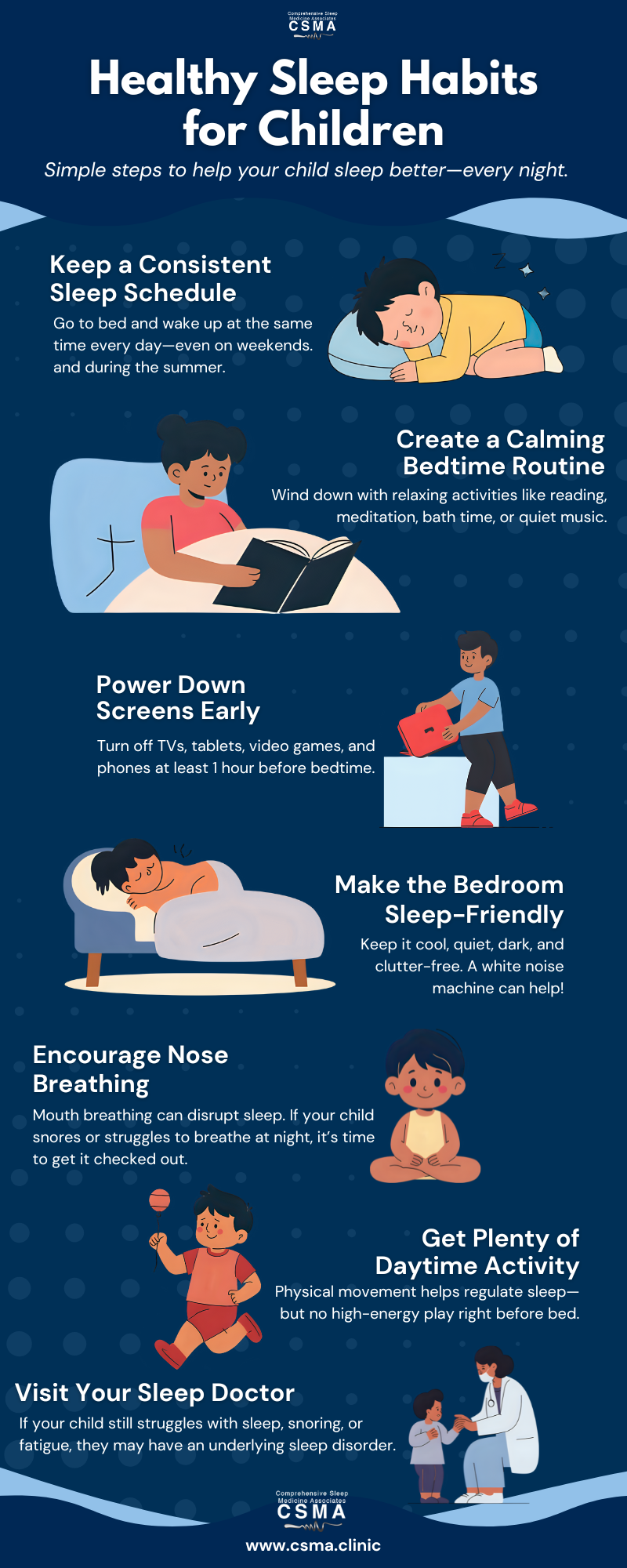
Healthy routines can help many children. A consistent schedule, calming wind-down period, age-appropriate bedtime and reduced evening screen exposure are useful foundations. However, routines alone cannot correct every medical sleep disorder. Persistent snoring, breathing pauses, morning headaches or significant daytime symptoms deserve professional evaluation.
When should I seek urgent help for my child’s breathing?
Seek emergency medical care if your child has severe trouble breathing, turns blue or gray, is difficult to wake or experiences another acute medical emergency. Routine sleep concerns and recurring snoring should be scheduled with an appropriate healthcare provider, but severe symptoms should not wait for an office visit.


Comments