
Holiday Sleep Strategies for Parents: How to Keep Rest on the Calendar

Holiday plans can be joyful and tiring at the same time. Late dinners, travel, visitors, screens, and sleeping in a new room can push a child’s routine off course. A few practical anchors and a well developed holiday sleep strategy can help children get enough rest without asking families to cancel every celebration.

If sleep problems show up throughout the year or include loud snoring, breathing pauses, or significant daytime sleepiness, it may be more than a busy-season schedule. For chronic, non-seasonal issues, we recommend you seek the support of your local Houston sleep doctor.
What is sleep association disorder?
“Sleep association disorder” is a common informal way to describe sleep-onset association insomnia. A child may rely on a particular condition to fall asleep, such as being rocked, fed, held, or having a parent remain beside the bed. If that condition is not present after a normal nighttime waking, the child may call for help to recreate it. This is different from a comforting bedtime routine such as reading a book and saying goodnight can be a predictable sequence, while needing the same adult action each time sleep begins or resumes can make independent settling harder.
The right response depends on the child’s age, health, development, and family circumstances. Parents can gradually build predictable cues that can be repeated at bedtime and during night wakings: a short story, dim lights, a familiar comfort object when age-safe, and a calm goodnight. If a change is needed, pick a manageable approach and use it consistently. A pediatrician can help rule out pain, breathing problems, anxiety, or other issues before treating repeated waking as a habit.
What are the most common sleep issues or disorders in kids?
Children may have difficulty falling asleep, bedtime resistance, nighttime awakenings, early waking, nightmares, or occasional sleep terrors. Changes in routine, stress, illness, developmental stages, and sleep habits can contribute. Persistent trouble may meet criteria for insomnia, which can involve difficulty starting or maintaining sleep and daytime effects.
Some sleep concerns need medical attention. Obstructive sleep apnea can involve loud or frequent snoring, mouth breathing, pauses or labored breathing, restless sleep, or daytime behavior and attention changes. Restless legs symptoms can make it uncomfortable to stay still at bedtime. Teens may develop a delayed sleep schedule that conflicts with early school start times. Less commonly, a child’s daytime sleepiness, unusual nighttime movements, or repeated events may call for assessment for narcolepsy, parasomnias, seizures, or another condition.
A single late night or a few rough nights during travel do not automatically mean a disorder. Look for a repeated pattern, impact on the child’s mood, learning, behavior, or family functioning, and signs such as snoring or breathing difficulty. A pediatrician or sleep specialist can review sleep timing, habits, medical history, and symptoms, and decide whether a sleep study or other testing is appropriate.
How can parents help kids adjust and get sleep during the holidays?
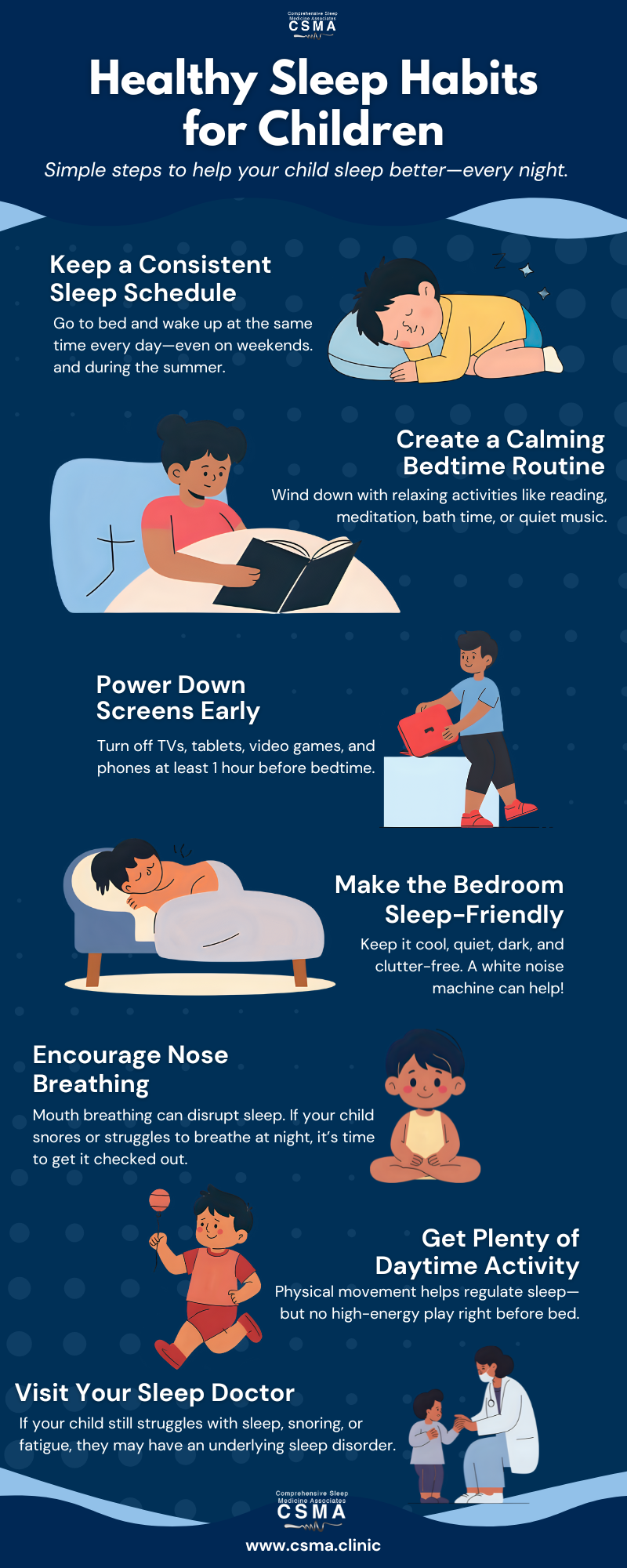
Keep a few anchors. Try to keep wake time and bedtime close to the usual schedule, even if other activities shift. A modest change is often easier to manage than moving bedtime by several hours every night. If a special event runs late, return to the familiar rhythm the next day instead of turning one exception into a new routine.
Bring familiar cues when traveling. Pack a favorite book, pajamas, sleep sack, or age-appropriate comfort item. Keep the wind-down sequence recognizable: wash up, brush teeth, read, lights low, goodnight. If the child sleeps in a new room, make it dark, quiet, and comfortably cool, and explain where you will be if they wake.
Plan around naps and quiet time. Younger children may still need regular naps; skipping them to make bedtime easier can backfire by making a child overtired. For older children, a calm break between busy events can reduce overstimulation. Build in outdoor play and movement during the day, then make the hour before bed slower and less exciting.
Set gentle boundaries for late-night screens and treats. Exciting games, bright screens, and large meals right before bed can make it harder for some children to wind down. You do not need to ban every holiday treat; aim for a familiar snack and routine on most nights. Keep screens out of the bedtime wind-down when possible.
Give kids a little warning before transitions. Tell them what will happen next: “We will finish dessert, say goodnight to cousins, and read your story at the hotel.” A predictable plan can lower bedtime friction, especially for children who find changes difficult.
Adjust with compassion. Travel, time changes, and family gatherings can disrupt sleep, and a perfect routine is not realistic. Focus on returning to core habits when you can. If the schedule shifts substantially, move bedtime earlier in small increments over several nights rather than expecting an immediate reset.
When should a parent ask for help?
Speak with your child’s healthcare provider if sleep problems last for weeks, regularly disrupt daytime functioning, or do not improve with a steady routine. Mention loud snoring, gasping or pauses in breathing, persistent mouth breathing, unusual movements, frequent night terrors, morning headaches, or a child who is very sleepy, irritable, or struggling at school. A sleep questionnaire or diary may help organize what you observe, but it does not replace a clinical assessment.
CSMA’s pediatric sleep care looks at sleep habits alongside possible neurological and breathing concerns. Families in Houston, Austin, Sugar Land, The Woodlands, and nearby areas can ask whether a sleep evaluation is right for their child. Getting support does not mean you have failed at bedtime; it means you are checking whether an underlying issue is making rest harder.
A calmer holiday starts with a realistic goal for holiday sleep
Children do not need a flawless schedule to sleep well. They benefit from regular cues, enough time for rest, and adults who notice when a pattern is becoming a problem. Choose one or two routines you can protect during the holidays, keep expectations flexible on travel days, and return to the usual rhythm afterward.

If your child’s sleep remains difficult after the season settles down, discuss the pattern with a pediatrician or qualified sleep specialist. Scheduled your appointment with CSMA at one of our Texas locations to start with a professional assessment to get your child the help they need to sleep be and stay healthy.
Frequently Asked Questions About Holiday Sleep Strategies for Parents
Should we keep the same bedtime during holiday travel?
Keep bedtime and wake time as close to normal as the trip allows. A small adjustment is usually easier to recover from than a large shift sustained over several nights.
Is it bad if my child needs me to fall asleep?
Not necessarily. Families use different routines, and needs vary by age. If the child cannot return to sleep without recreating a specific condition and this is exhausting the family, discuss gradual changes with the pediatrician.
Is snoring normal in children?
Occasional snoring during a cold can happen, but regular loud snoring, gasping, pauses, or labored breathing should be discussed with a healthcare provider
When should I seek a pediatric sleep evaluation?
Consider one when persistent sleep problems affect daytime mood, attention, school, or family life, or when there are signs of breathing difficulty or unusual nighttime events.


Comments