
What Happens During a Sleep Study? A Step-by-Step Guide

If you’ve been referred to a sleep study center in Austin, TX or Houston, TX, you probably have questions. What exactly happens? Will you actually be able to sleep? Is it uncomfortable? And what can it really diagnose?
Sleep testing is one of the most powerful tools available for identifying underlying sleep disorders — many of which directly impact brain health, heart health, mood, and long-term wellness. At Comprehensive Sleep Medicine Associates (CSMA), patients receive advanced diagnostic testing guided by an experienced sleep doctor in Austin, TX and Houston, TX, with a personalized approach to care.
Whether you are exploring sleep testing in Houston, TX or seeking answers for persistent sleep disorders in Austin, TX, this step-by-step guide explains exactly what to expect.
What Is Sleep Testing?
Sleep testing (also called polysomnography) is a diagnostic evaluation that monitors your body’s activity while you sleep. It records:
Breathing patterns
Oxygen levels
Heart rate
Muscle activity
Eye movements
Body position
This information gives your physician a detailed look at your sleep cycles and identifies abnormalities that may be disrupting restorative rest.
Sleep testing may take place in a sleep lab or, in certain cases, at home using a portable monitoring device — depending on your symptoms and risk factors.
Who Is a Sleep Study For?
You may be referred to a sleep study center in Austin, TX or Houston, TX if you experience:
Loud snoring or gasping during sleep
Chronic insomnia
Morning headaches
Brain fog or memory issues
Mood instability
Unexplained fatigue
Difficulty staying asleep
Sleep testing is especially important for individuals at risk for:
REM behavior disorder
Neurological sleep-related conditions
If left untreated, sleep disorders can increase the risk of high blood pressure, stroke, heart disease, cognitive decline, and mental health disorders.
What Happens During a Sleep Study? Step-by-Step
Let’s break it down.
Step 1: Pre-Study Consultation
Before your test, you’ll meet with a sleep disorder specialist in Houston, TX or Austin to review:
Your symptoms
Medical history
Medications
Current sleep patterns
This consultation determines which type of sleep testing is most appropriate for your situation.
Step 2: Arrival at the Sleep Study Center
For in-lab testing, you’ll arrive in the evening at the sleep study center in Austin, TX or Houston, TX.
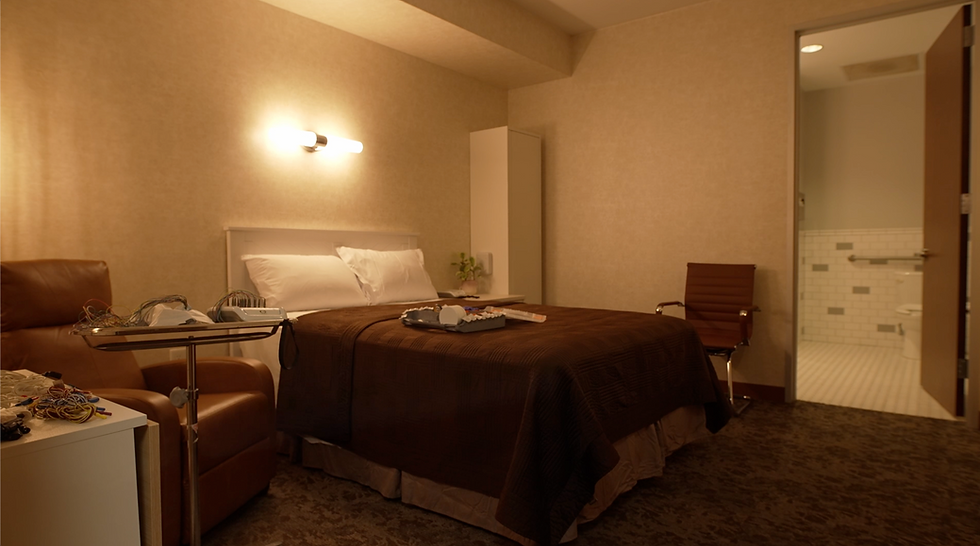
The setting is designed to be comfortable and calming — similar to a private hotel room. The goal is to help you sleep as naturally as possible.
Step 3: Sensor Placement (Painless and Non-Invasive)
A trained technologist places small sensors on your scalp, chest, legs, and finger. These are secured using gentle adhesive or soft wraps.
Important to know:
No needles
No pain
Nothing invasive
The sensors simply collect data while you sleep.
Step 4: Lights Out
You’ll go to bed at your typical bedtime. A technologist monitors your sleep data from another room throughout the night.
Even if you feel like you didn’t sleep much, sleep studies typically capture enough data for an accurate diagnosis.
Step 5: Morning Wrap-Up
In the morning, the sensors are removed, and you’re free to go home or to work. The collected data is then analyzed by your physician, often an experienced sleep doctor in Austin, TX, who interprets your results and develops a personalized treatment plan.
What Can a Sleep Study Diagnose?
Sleep testing provides far more insight than many people realize.
Obstructive and Central Sleep Apnea
Sleep apnea is one of the most commonly diagnosed conditions during a sleep study. Obstructive sleep apnea occurs when airway collapse interrupts breathing. Central sleep apnea occurs when the brain fails to properly signal breathing. Both conditions fragment sleep and lower oxygen levels, increasing cardiovascular and neurological risks.
Insomnia Patterns
A sleep study can help differentiate primary insomnia from sleep fragmentation caused by apnea, limb movements, or other physiological disruptions.
Narcolepsy and Hypersomnia
Excessive daytime sleepiness may indicate narcolepsy or other hypersomnia disorders. Specialized testing such as a Multiple Sleep Latency Test (MSLT) helps measure how quickly you fall asleep during the day.
Restless Legs Syndrome and Periodic Limb Movement Disorder
Uncontrolled limb movements during sleep can significantly disrupt rest without the patient realizing it. Sleep testing quantifies these movements, and the possibility of Restless Legs Syndrome, and their impact.
Parasomnias
Sleepwalking, night terrors, and REM behavior disorder often require monitored sleep cycles to confirm diagnosis.
Circadian Rhythm Disorders
When your internal sleep clock is misaligned with your lifestyle, sleep studies help identify abnormal sleep timing and architecture.
Seizure Disorders During Sleep
For patients with neurological conditions, sleep studies may reveal nocturnal seizure activity that would otherwise go undetected.
Accurate diagnosis leads to precise treatment — not guesswork.
Benefits of Sleep Testing
Sleep testing doesn’t just diagnose problems — it unlocks solutions.
Objective, Personalized Diagnosis
Sleep studies provide measurable data. This allows your physician to tailor treatment based on your unique physiology rather than assumptions.
Improved Daytime Energy and Focus
When sleep disruption is treated, patients often notice improved alertness, sharper memory, and better cognitive performance.
Reduced Health Risks
Treating sleep disorders lowers the risk of high blood pressure, heart disease, stroke, diabetes, and mood disorders.
Better Neurological Stability
For patients with seizures or cognitive concerns, optimizing sleep can reduce symptom frequency and severity.
Improved Quality of Life
Better sleep improves mood, productivity, relationships, and overall well-being. Many patients report they didn’t realize how exhausted they truly were until effective treatment restored restorative sleep.
Targeted Treatment Options
Your sleep specialist will work on a customized treatment plan based on your symptoms, testing results, and life-style. Based on results, treatment may include:
CPAP therapy
Oral appliance therapy
Medication adjustments
Cognitive Behavioral Therapy for Insomnia (CBT-I)
Neurological follow-up
What Makes CSMA Different?
At Comprehensive Sleep Medicine Associates, sleep care is not one-size-fits-all.
Leadership in Sleep Medicine and Neurology
CSMA is led by Dr. Jerald H. Simmons, a nationally recognized and triple board-certified physician specializing in neurology and sleep medicine. His background bridges the gap between brain health and sleep science, offering patients an advanced level of expertise.
Pioneering Education and Innovation
CSMA is closely connected with the Sleep Education Consortium (SEC), reflecting its commitment to advancing sleep medicine knowledge and training healthcare professionals across Texas and beyond.
Comprehensive, Whole-Person Approach
CSMA evaluates not just symptoms, but underlying causes. Their approach integrates neurological insight with sleep diagnostics to ensure accurate, long-term solutions.
Accessible Care Across Texas
With clinics serving Austin and Houston, as well as telemedicine options, CSMA provides advanced sleep diagnostics to patients throughout the region.
Patients receive expert-level care with a personalized, thoughtful approach focused on lasting results.
Frequently Asked Questions About Sleep Testing
Is a sleep study uncomfortable?
No. The sensors are painless and non-invasive. Most patients adjust quickly and sleep naturally.
What if I can’t fall asleep?
Even partial sleep provides sufficient diagnostic data.
How long does sleep testing take?
An overnight study typically lasts 6–8 hours. Home sleep testing is usually conducted over one night.
Will insurance cover my sleep study?
Most insurance plans cover medically necessary sleep testing. Check with your provider for details.
When will I get my results?
Results are generally reviewed within 1–2 weeks, followed by a consultation with your physician.
What happens after diagnosis?
Treatment depends on findings and may include CPAP therapy, oral appliances, medication adjustments, behavioral therapy, or neurological follow-up.
Take the Next Step Toward Better Sleep
It’s time to move from uncertainty to clarity when it comes to your sleep health!
Comprehensive Sleep Medicine Associates provides advanced sleep testing and personalized treatment plans designed to restore healthy sleep and protect long-term brain and cardiovascular health.

Contact CSMA today to schedule your sleep study consultation and take the first step toward better sleep and better health.


Comments